
How Bench Warrants Work in Marshall County
A Marshall County bench warrant is court process aimed at someone who already owes the court something. The usual triggers are a missed appearance, an unpaid fine, noncompliance, a probation problem, or defiance of a judge's order. Dockets may call it a failure-to-appear warrant, alias warrant, alias writ, or simply a bench warrant. "Capias pro fine" is not the label Marshall County typically publishes, so match whatever term your docket uses. Arab Municipal Court warns flatly that failing to appear may bring a bench warrant. State and county traffic pages tie a missed date to an arrest warrant and possible ALEA license suspension. Whatever the label, the court that set the date owns the record and controls recall.
Arab’s Marshall County FTA Warning
The Arab Municipal Court page lays out a city process: police take a report, the magistrate reviews probable cause, and the complainant swears to the complaint. It also warns that a defendant's failure to appear may lead the presiding judge to issue a bench warrant in this Marshall County city.
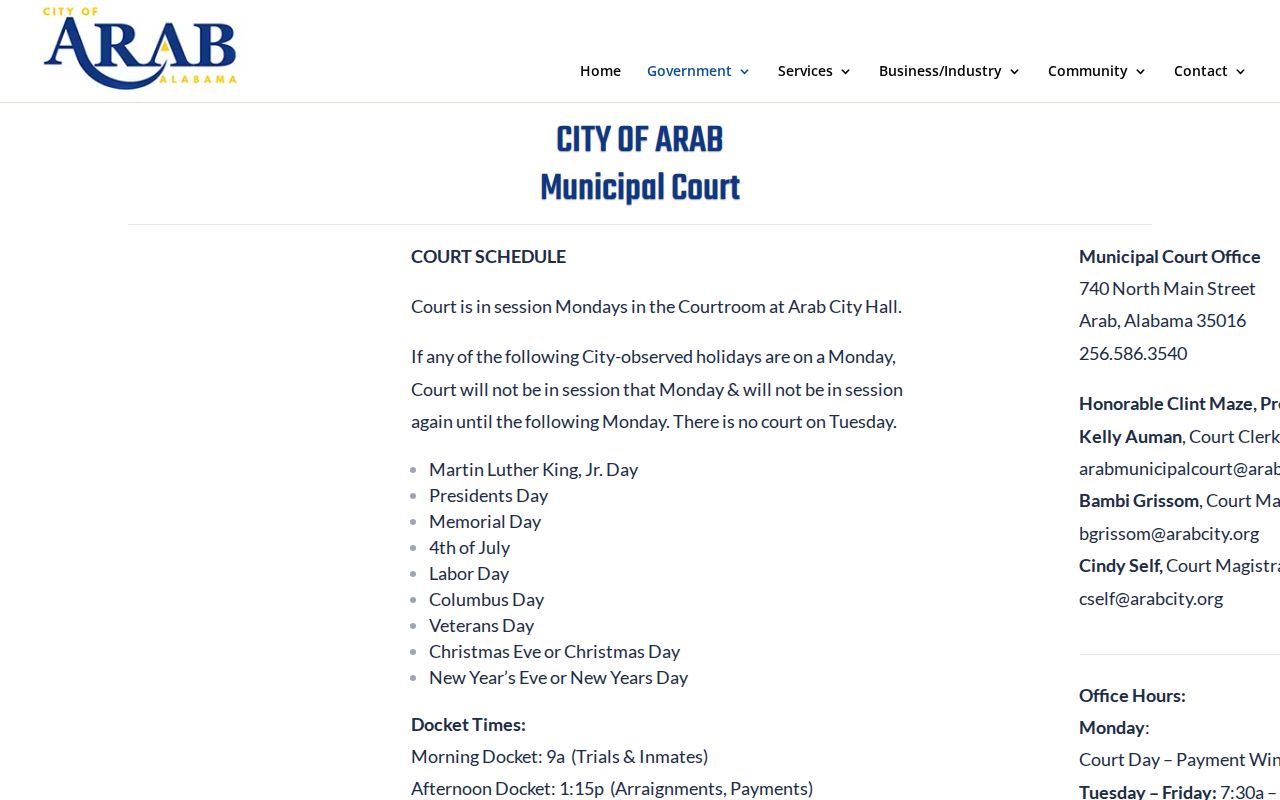
An Arab case belongs to City Court, not a county roster. Call (256) 586-3540 in Marshall County. Ask whether you need a new date, payment, bond, or a judge appearance.
How Marshall Bench Warrants Issue
A bench warrant starts with a court event, not a fresh complaint. The judge reviews the missed setting or claimed noncompliance and orders arrest process when authorized. The clerk records the order and an officer may serve it. Under Alabama Rule of Criminal Procedure 3.3, the officer returns execution details to the named clerk in Marshall County.
The path can be stated simply: required setting → absence or noncompliance → judicial warrant → service or recall → case resumes. A late payment or phone call does not skip the judicial step when the warrant has already issued.
Marshall Bench, Alias, and FTA
Different local labels can point to related but distinct court actions in Marshall County. Read the charge line, case number, issuing court, and status together.
- Bench warrant
- A judge’s arrest process, often for a missed court duty.
- FTA
- Failure to appear when the court required attendance.
- Alias warrant
- Later arrest process after failure to appear or comply.
- Recall
- The issuing court withdraws the warrant.
- Quash
- The court sets the warrant aside; the case may continue.
- Bond forfeiture
- Loss of posted security after a failure to meet bond terms.
Alabama's form index lists C-65a, the "Alias Warrant of Arrest for Failure of Defendant to Appear." That statewide title does not settle which label a Marshall County docket uses.
How Bench and Arrest Warrants Differ
A bench warrant and a new arrest warrant can both authorize custody, yet they start from different points in Marshall County. Confirm the document itself rather than trusting a roster charge label.
| Point | Bench warrant | Arrest warrant |
|---|---|---|
| Trigger | Missed date or court noncompliance | Sworn facts and probable cause |
| Case stage | Usually an existing case | May begin a criminal case |
| Issuer | Judge controlling the setting | Magistrate or judge |
| Resolution | New date, bond, payment, or recall as ordered | Surrender, bond, hearing, or court order |
Probationer warrants and domestic enforcement may follow other rules and keep restricted records. Do not force them into either column without the clerk's confirmation. A traffic FTA adds its own layer in Marshall County. The county traffic page warns that a missed date may bring warrant process, higher fines, bond forfeiture, and an ALEA notice. A city ticket stays with its municipal court, while a deputy or state-trooper ticket generally routes to District Court. The trigger may sound the same, but the office with power to set a new date or recall the bench warrant differs. Give the clerk your citation or case number and last setting. Ask whether payment is eligible, whether a judge must act, and how the court documents clearance.
The Marshall Court Controls
A sheriff may serve the warrant. Only the issuing court can change it. County traffic and rural misdemeanor matters route through Marshall County District Court, felonies may touch District Court first and Circuit Court after indictment, and city cases stay with municipal court. Call the Marshall County Circuit Clerk at (256) 571-7785 for Traffic, District Criminal, or Circuit Criminal routing. The Guntersville clerk office has a public-access computer. Albertville, Arab, Boaz, Guntersville, Grant, and Douglas municipal courts hold their own city files, so a municipal bench warrant may not appear on the sheriff's roster or Most Wanted page.
Myth: If a name is not on Most Wanted, there is no bench warrant. Fact: Most Wanted is curated and not a full court index.
Clearing a Bench Warrant in Marshall County
Call before you appear anywhere in Marshall County. Have the clerk confirm the case number, last setting, warrant type, and current status. Ask whether the court allows a new date, payment, bond, attorney walk-through, or recall request. Clerks explain process but cannot change an order or give legal advice.
- Identify the court from the ticket, notice, or last hearing.
- Confirm the warrant with that clerk and the sheriff at (256) 582-2034.
- Ask what an in-person visit may involve and where bond is posted.
- Complete the ordered appearance, payment, bond, or filing.
- Obtain proof of recall or service and ask when other systems update.
Before appearing: A lawyer can contact the court, assess custody risk, and help plan a lawful surrender when needed.
Guntersville Surrender and Bond
Guntersville Municipal Court gives direct local guidance for this Marshall County city: a person with an outstanding warrant should turn in on the warrant and post the appropriate bond. The court sits at 325 Gunter Avenue, while Wednesday court is held in Town Hall at 340 Blount Avenue. Call (256) 571-7579 first.
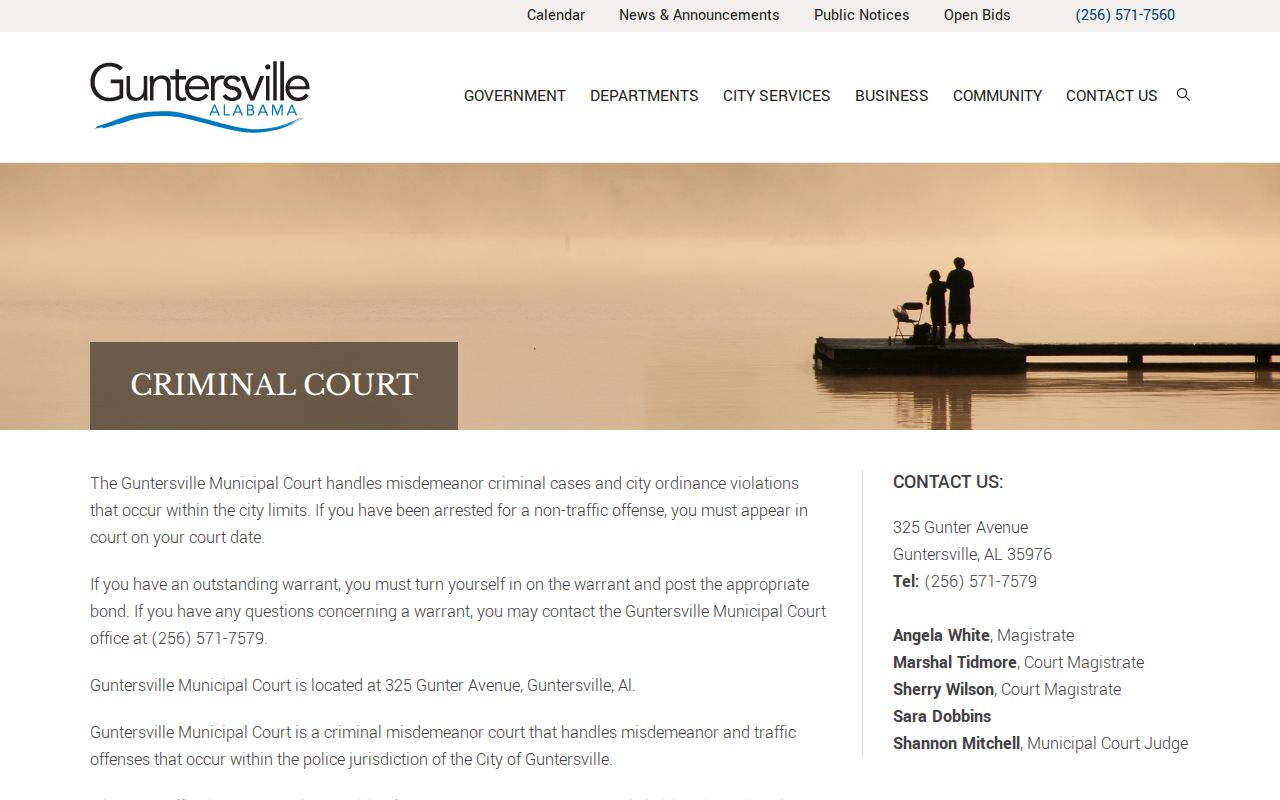
The Guntersville page posts no universal bond amount, payment list, recall form, or after-hours warrant intake in Marshall County. Those points stay case-specific.
Marshall County Courts That Issue Bench Warrants
Which court owns the process depends on the case. In Marshall County, the courthouse, sheriff, and city court may each hold relevant facts, but they do not share the same authority.
| Court | Typical case | Contact |
|---|---|---|
| District Court | County traffic and rural misdemeanors | (256) 571-7785 |
| Circuit Court | Felony and Circuit matters | Clerk option 4 |
| Albertville Municipal | City traffic and misdemeanors | (256) 891-8291 |
| Arab Municipal | City cases and FTA | (256) 586-3540 |
| Boaz Municipal | City citations and cases | (256) 593-6476 |
| Grant Municipal | Town traffic and misdemeanors | (256) 728-2007 |
Juvenile files are confidential under Alabama law. In Marshall County, Child Support and PFA matters use separate Albertville clerk routing, so do not assume they are ordinary criminal bench warrants.
Proof of Marshall Warrant Clearance
Get proof in writing, not just a payment screen. Ask the clerk for whatever matches the court's action: a receipt, a docket entry, a new setting notice, a bond record, or a signed recall order. Then ask when the sheriff and ALEA records will show the result. A name dropping off a roster proves nothing. Marshall County's 2024 court audit reports an added $100 fee when a failure-to-appear warrant is served by the sheriff or deputies under local law. That figure is not a general bond amount. Bond secures release and future appearance only; the underlying case stays open. Attend every later setting to avoid new process. For the full confirmation and resolution path, see the Marshall County warrant records overview.